 I have always been fond of movies. The kind of fondness that begins casually—late-night cable TV playing in the background—and somehow survives every phase of life.
Some of my earliest cinema memories are tied to endless reruns on Set Max, especially
I have always been fond of movies. The kind of fondness that begins casually—late-night cable TV playing in the background—and somehow survives every phase of life.
Some of my earliest cinema memories are tied to endless reruns on Set Max, especially
 Sooryavansham
playing so often that it almost felt like part of the channel’s identity.
Weekends had their own rhythm too, usually filled with the cartoon movies of
Doraemon: Nobita and the New Steel Troops—Winged Angels
, which somehow made those days feel longer and lighter than they actually were.
Today, watching a movie feels like a conversation between two versions of myself:
the kid who simply wants to feel something, and the critic who wants to understand why.
This blog is where those two selves shake hands.
Sooryavansham
playing so often that it almost felt like part of the channel’s identity.
Weekends had their own rhythm too, usually filled with the cartoon movies of
Doraemon: Nobita and the New Steel Troops—Winged Angels
, which somehow made those days feel longer and lighter than they actually were.
Today, watching a movie feels like a conversation between two versions of myself:
the kid who simply wants to feel something, and the critic who wants to understand why.
This blog is where those two selves shake hands.
As I grew older, my tastes started expanding in small but memorable ways. There was a phase where I was obsessed with South Indian action-crime films—movies like Magadheera that felt larger than life, full of swagger, intensity, and dramatic storytelling. At home, movies were also something I shared with my dad. We would watch big disaster and science-fiction films like 2012, The Core,
 The Day after tommorow
, the kind of movies that made you imagine impossible things while still feeling like simple family time.
Another big part of my movie memories comes from our old DVD player. My cousin didi and I would watch Dhoom—especially the Hrithik Roshan one—again and again until we practically knew every scene. Around the same time, I also grew up listening to and watching Vikram–Vetal stories, which I still have a soft spot for even today.
But the real turning point was visiting my cousin during summer vacations. They had a laptop filled with movies—new ones, old ones, everything. I would sit there for hours, sometimes the whole day, just watching film after film.
That’s where I first discovered entire worlds of cinema: the Harry Potter series, science-fiction stories, the X-Men franchise, and massive spectacles like
The Day after tommorow
, the kind of movies that made you imagine impossible things while still feeling like simple family time.
Another big part of my movie memories comes from our old DVD player. My cousin didi and I would watch Dhoom—especially the Hrithik Roshan one—again and again until we practically knew every scene. Around the same time, I also grew up listening to and watching Vikram–Vetal stories, which I still have a soft spot for even today.
But the real turning point was visiting my cousin during summer vacations. They had a laptop filled with movies—new ones, old ones, everything. I would sit there for hours, sometimes the whole day, just watching film after film.
That’s where I first discovered entire worlds of cinema: the Harry Potter series, science-fiction stories, the X-Men franchise, and massive spectacles like
 Pacific Rim
.
Looking back, those summer afternoons were probably my real introduction to the idea that movies weren’t just entertainment—they were entire universes you could step into.
Pacific Rim
.
Looking back, those summer afternoons were probably my real introduction to the idea that movies weren’t just entertainment—they were entire universes you could step into.
Beyond the Screen
It happened during a lecture called “The Language of Hidden Cinema” at @thecartesianroom. Sitting there, it felt like someone had handed me a new dictionary for films I had already seen a hundred times. Suddenly movies weren’t just stories anymore. I started noticing the quiet things: the subtext behind a scene, the grammar of lighting, the politics of casting, the rhythm of edits, the way a camera moves when a character feels lost. Around the same time, spaces like @compere_ahmedabad. introduced me to another side of cinema—smaller, global, niche films that I probably would never have discovered on my own. This is also where I rewatched Dev D
More importantly, they introduced me to conversations about films. Not just what happens in a movie, but why it happens, what it means, and how different people can see completely different stories in the same frame.
That’s when my relationship with movies started changing. My taste evolved—not by abandoning the films I grew up with, but by seeing them differently. I began appreciating the cinematic craft behind them, and the many perspectives through which a film can be understood.
Today, watching a movie feels like a conversation between two versions of myself:
the kid who simply wants to feel something, and the critic who wants to understand why.
Dev D
More importantly, they introduced me to conversations about films. Not just what happens in a movie, but why it happens, what it means, and how different people can see completely different stories in the same frame.
That’s when my relationship with movies started changing. My taste evolved—not by abandoning the films I grew up with, but by seeing them differently. I began appreciating the cinematic craft behind them, and the many perspectives through which a film can be understood.
Today, watching a movie feels like a conversation between two versions of myself:
the kid who simply wants to feel something, and the critic who wants to understand why.
My Global Film Constellation
Outside Bollywood, my film tastes look like a scattered constellation—each star a different
obsession. I often return to stories about identity and redemption such as
The Shawshank Redemption , Good Will Hunting , Dead Poets Society , The Pursuit of Happyness , and
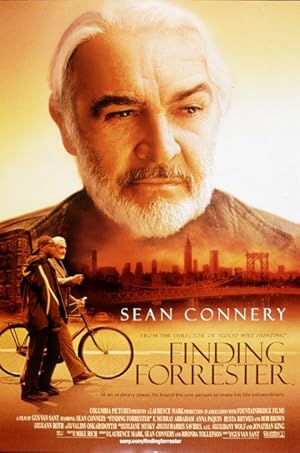 Finding Forrester.
These films feel less like entertainment and more like quiet conversations with myself.
Finding Forrester.
These films feel less like entertainment and more like quiet conversations with myself.
Then there are the films that bend time and reality. Inception , Interstellar , The Matrix , Tenet , and Back to the Future make time feel like a puzzle you could almost solve if you stared long enough. Time-loop thrillers like Maanaadu and Edge of Tomorrow add a playful urgency to that fascination.
Crime and mystery is another world I constantly revisit. In Se7en , Gone Girl , The Usual Suspects , Prisoners , and Heat (1995), every scene feels like a carefully calculated chess move. War and survival narratives such as Saving Private Ryan , The Pianist , and Inglourious Basterds remind me that history may look cinematic, but it is never clean.
Then there is the genre of psychological chaos—films like
 Fight Club,
Pulp Fiction , Taxi Driver , and Collateral , which feel like thrilling storms of
ideas and energy.
Fight Club,
Pulp Fiction , Taxi Driver , and Collateral , which feel like thrilling storms of
ideas and energy.
Animation opens a completely different emotional channel. Studio Ghibli’s Spirited Away feels like a dream that never needs decoding, while A Silent Voice and Your Name remain the only films that have ever made me cry. I’m a also die-hard fan of the How to Train Your Dragon trilogy.
Korean cinema, especially Memories of Murder and Parasite , brings a quiet, surgical patience to storytelling. Whiplash is the film I return to when I need to feel the intensity of obsession.
And then there are the personal outliers—
Arrival ,
Eternal Sunshine of the Spotless Mind , Jack Reacher ,
Smoking , and yes,
The Core
 . Each one represents a different
phase of my own cinephile history.
. Each one represents a different
phase of my own cinephile history.
Rewatch Rituals
Some films are not merely watched—they are revisited like old friends. Every rewatch becomes a small checkpoint in time. The film stays the same, but I don’t. These movies have become my compass, quietly marking who I was, who I am, and who I might become.
-
Om Shanti Om:
Pure nostalgia—the theatre crowd went crazy during the “Deewangi Deewangi” song.

- A Silent Voice: The only movie that has ever made me cry.
- Interstellar: Rewatched in theatres at a 6 a.m. show on a Monday morning before office.
- 3 Idiots: Rewatched with dad whenever its on TV — still makes us laugh and feel seen.
- Bhaag Milkha Bhaag: One of the most and best inspiring sports films I have ever seen— every rewatch feels like a motivation reset. I wish to have a physic like Farhan Akhtar from this one.
- Ford v Ferrari: A perfect film about obsession, craft, and the beauty of building something fast.
- Dead Poets Society: “Carpe Diem.” "O captian My Captian" A film that quietly reminds me why ideas and teachers matter.
- Scent of a Woman: Al Pacino’s performance alone makes this worth revisiting again and again.
- Bhool Bhulaiyaa: Equal parts comedy and mystery — and still one of the most fun Bollywood rewatches.
- The Hangover Trilogy: Sometimes the best rewatches are chaotic ones — Hangover 1, 2, and 3 never fail to make movie nights ridiculous.

Closing note
I don’t really watch movies in a straight line. I circle them, argue with them, rewatch them, and sometimes forgive them. That is how my personal diary and inner critic coexist. Bollywood gives me the emotional vocabulary, and world cinema gives me the syntax. Somewhere between the two is the voice I’m still building. If any of these films are your companions too, tell me which ones you return to—and why.
I actually recently started tracking all the movies, anime, show and books I’m watching and reading on a Letterboxd.
You met me at a very strange time in my life. Cheers !!